AI-native Admin Hub
Designing a proactive control layer for enterprise admins
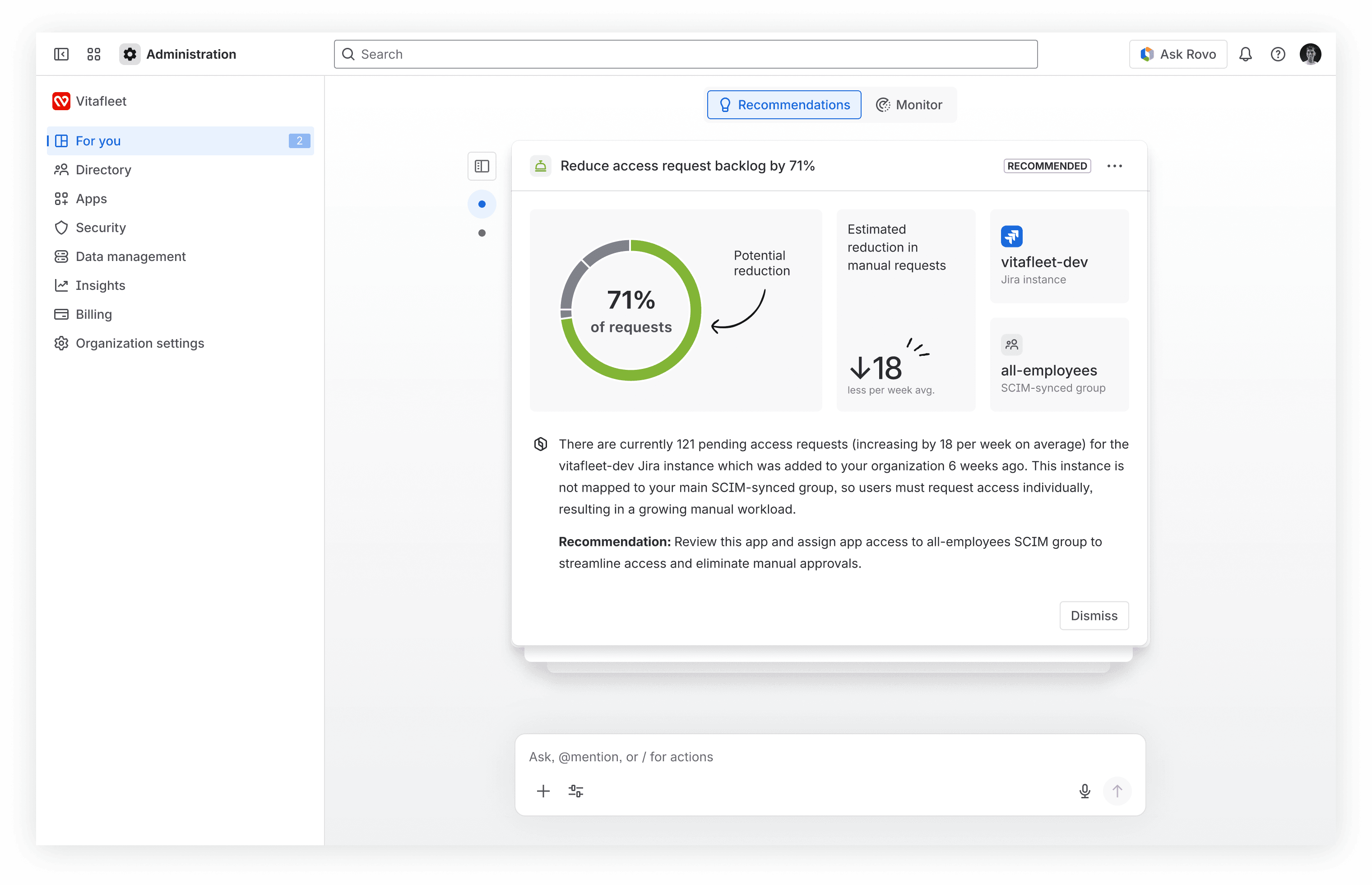
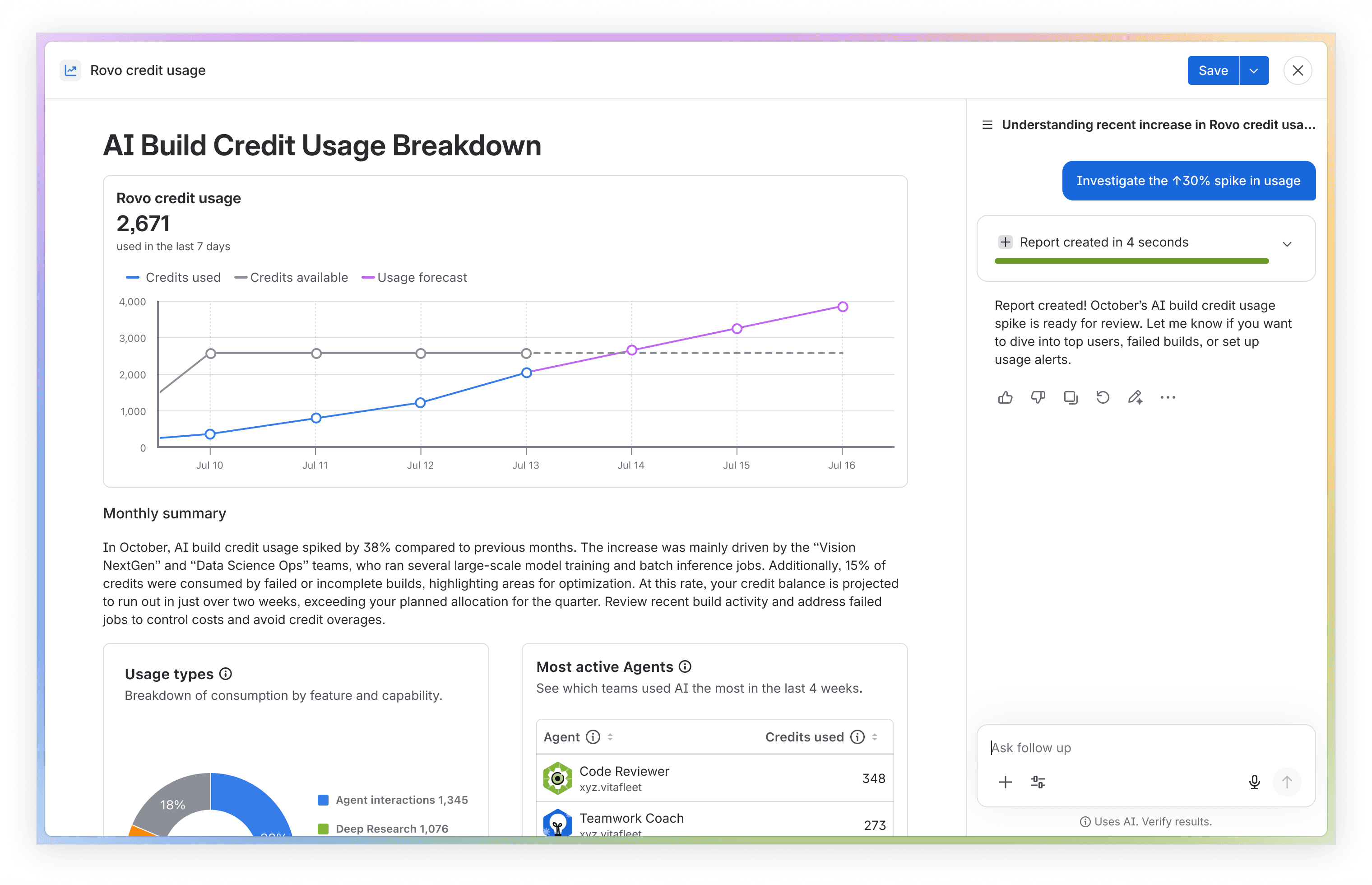
I led the 0→1 product direction for an AI-native admin experience that helped enterprise admins move from fragmented, reactive workflows to proactive oversight. The vision introduced Watchtower: a new admin home that surfaces prioritised recommendations, monitors critical signals, and supports guided investigation through AI-assisted canvas workflows.
Role
Senior product designer
Type
0→1 AI-native product vision
Team
With Lead PM, Senior Eng & Design Manager
Outcome
Aligned the team around Watchtower as the path for AI-native admin, with early LLM-powered proof-of-concept work approved
The problem
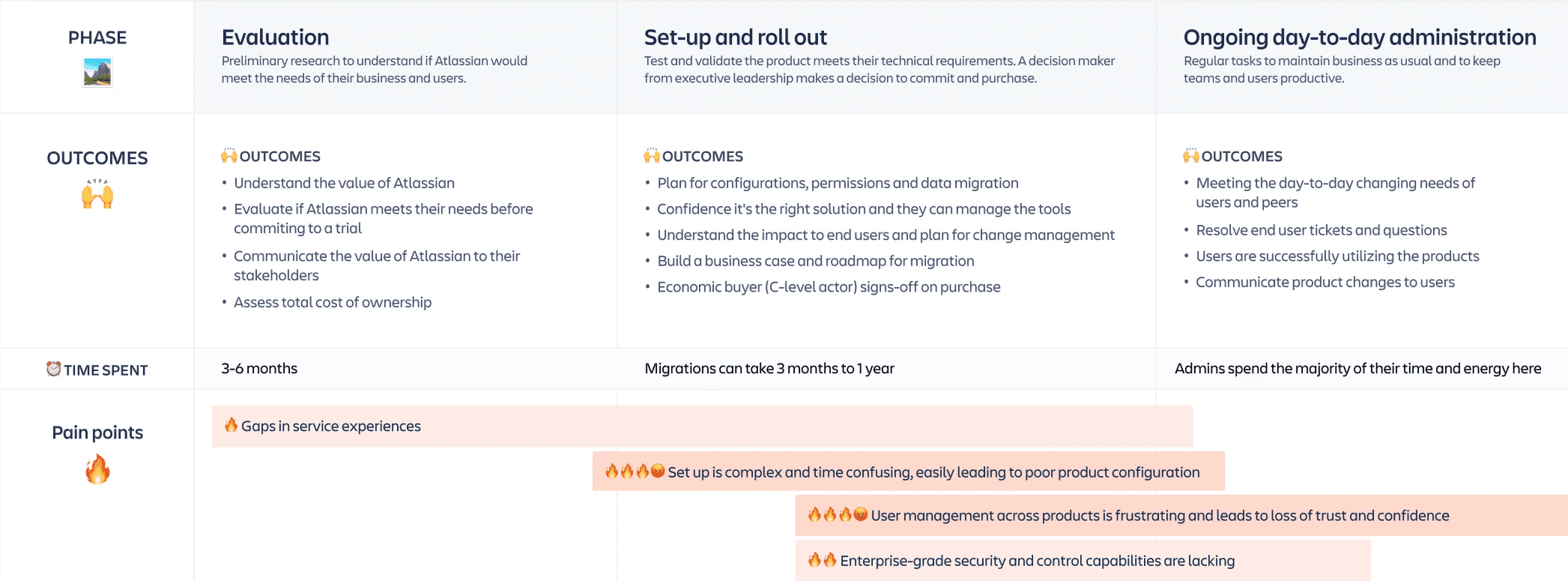
Current state: admins had to piece the system together manually
Before Watchtower, admins had to move across multiple product surfaces to answer basic questions:
What needs my attention?
Is this a risk, an opportunity, or normal activity?
What evidence should I trust?
What action should I take next?
The challenge was not simply to make dashboards better. It was to design a new operating model for admin work.
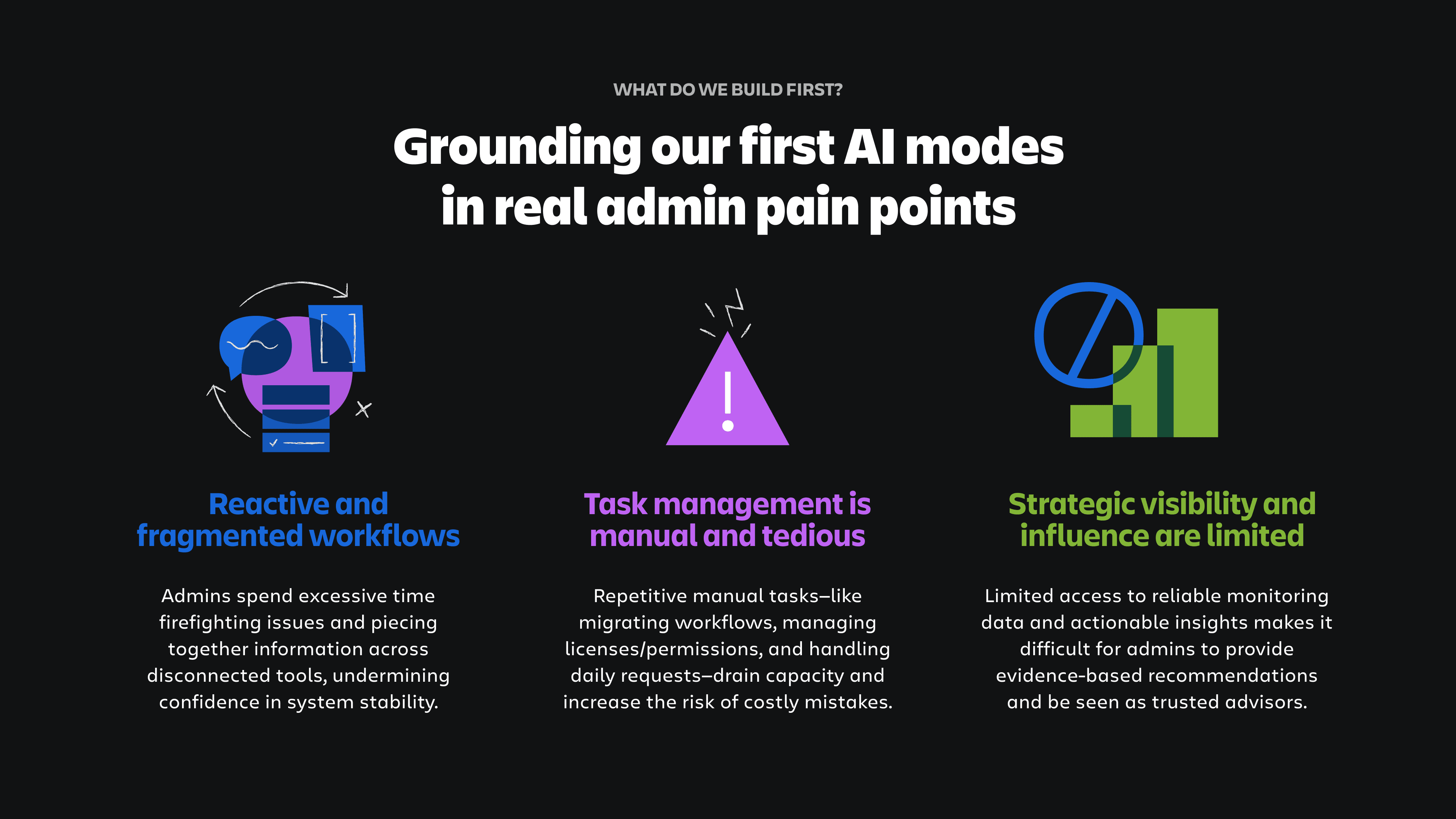
Why it mattered
A business strategy problem
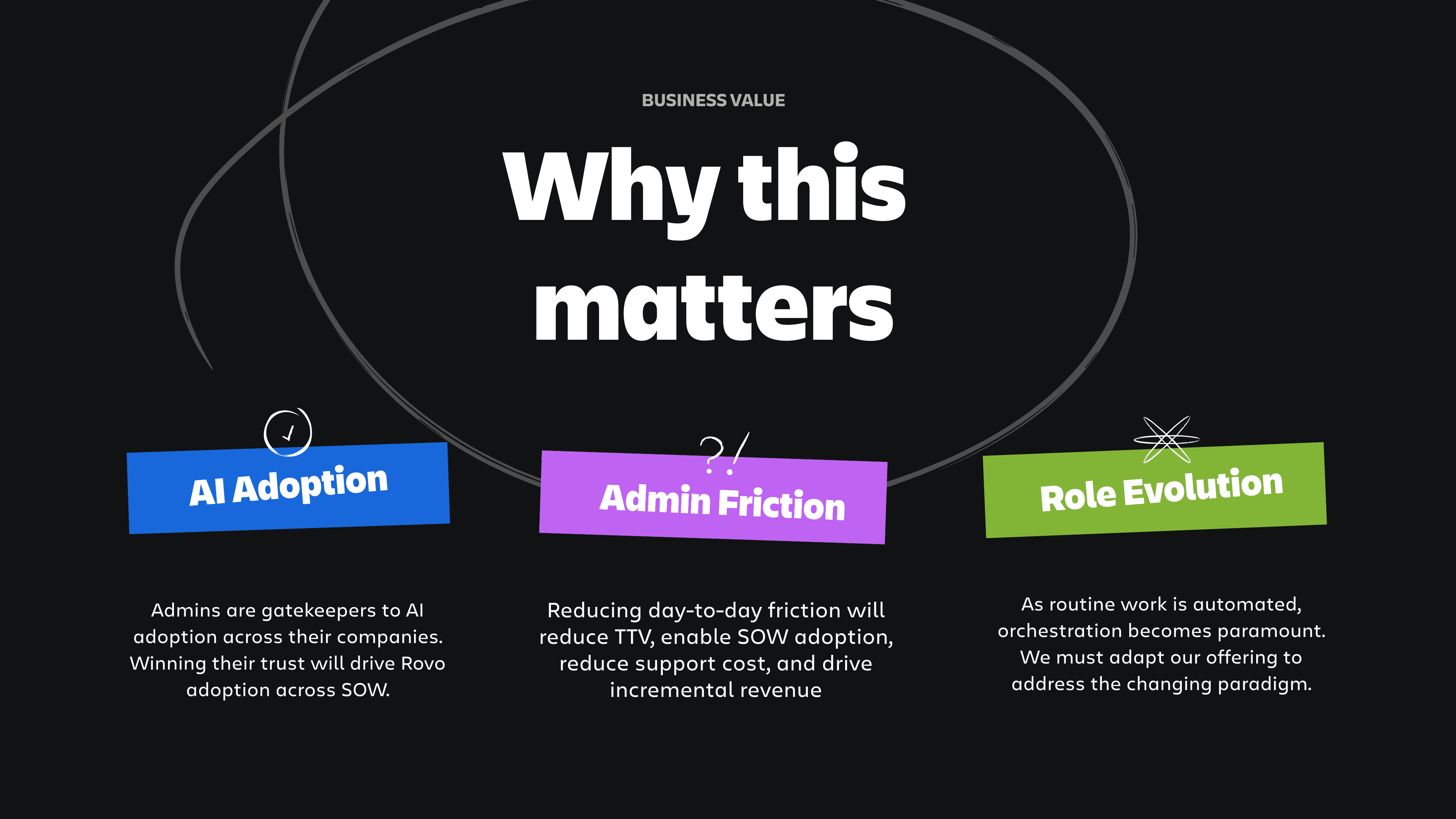
The opportunity was not just a better admin experience. A more proactive admin model could support three business outcomes:
My design challenge
How might we help enterprise admins notice what matters, understand why it matters, and act with confidence — without forcing them to manually search across fragmented admin tools?
This gave the team a clearer product direction:
move from reactive to proactive
move from scattered dashboards to prioritised signals
move from raw data to explainable recommendations
move from chat-only AI to guided workflows
move from isolated admin tasks to a connected operating model
The vision
Watchtower was designed as a complementary admin “home,” not a replacement for the existing Admin Hub.
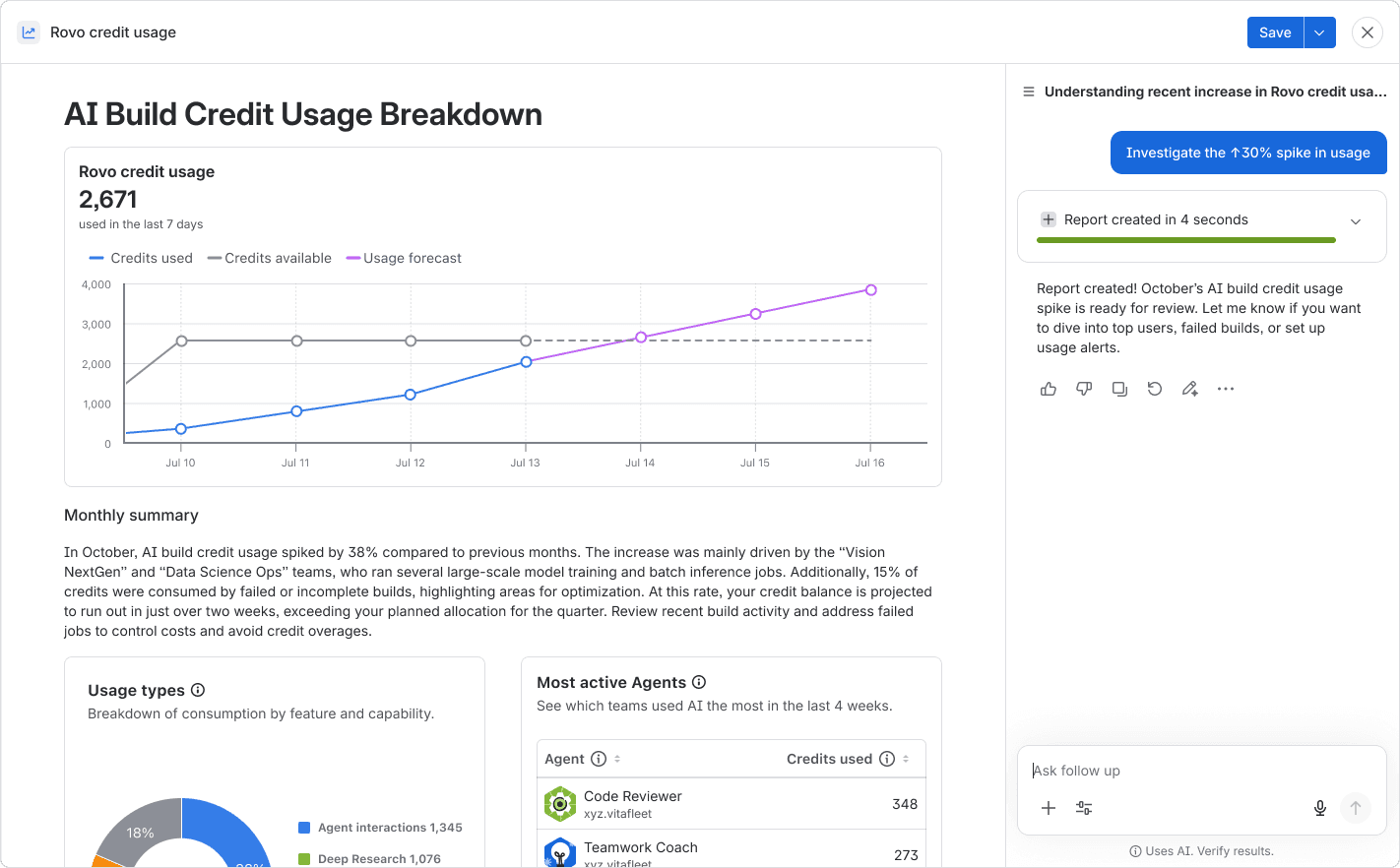
It brought together three parts:
Recommendations — surface the most important tasks, risks, and opportunities
Monitor — track important signals, anomalies, and system health
Canvas — help admins investigate, plan, and complete complex work in context
Together, these created a new AI-native operating model for admins: one that was proactive, explainable, and action-oriented.
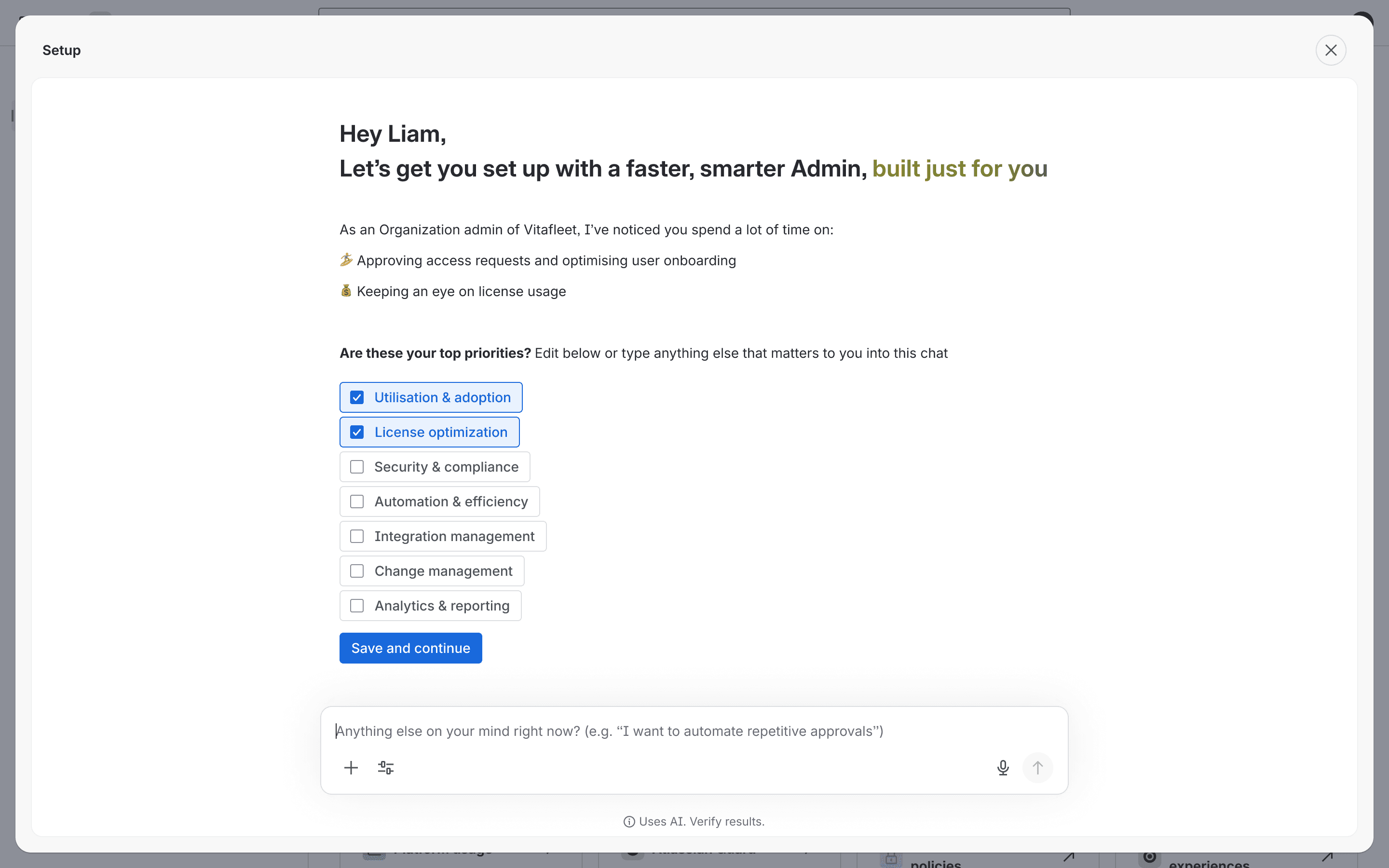
Onboarding: personalising the admin contex
The onboarding flow helped establish each admin’s responsibilities, priorities, and context. This gave Watchtower a stronger foundation for personalising recommendations and surfacing relevant signals.
Instead of treating every admin the same, the system could understand what the admin cared about — such as security, compliance, user management, adoption, or cost optimisation.
Recommendation: helping admins notice what matters
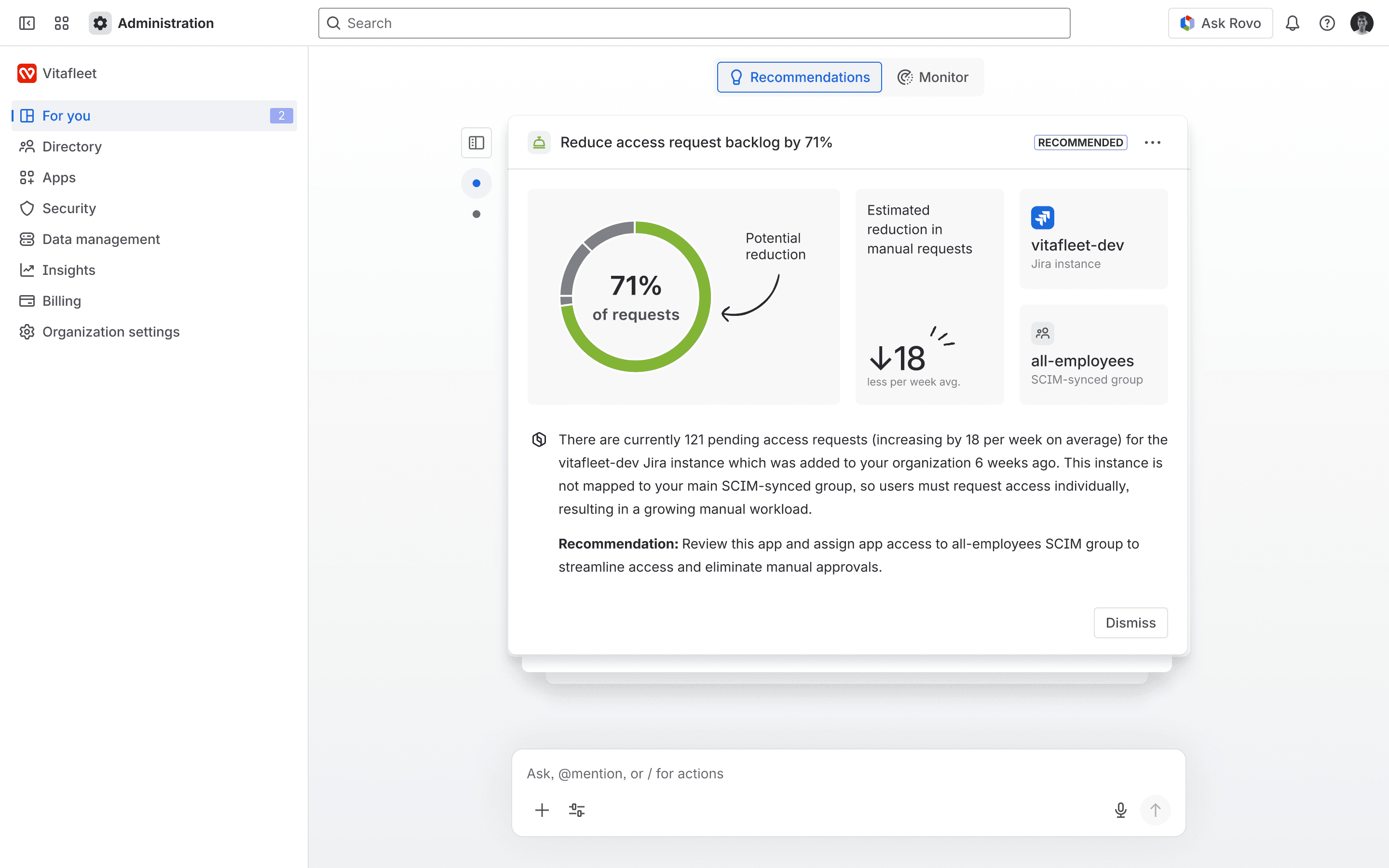
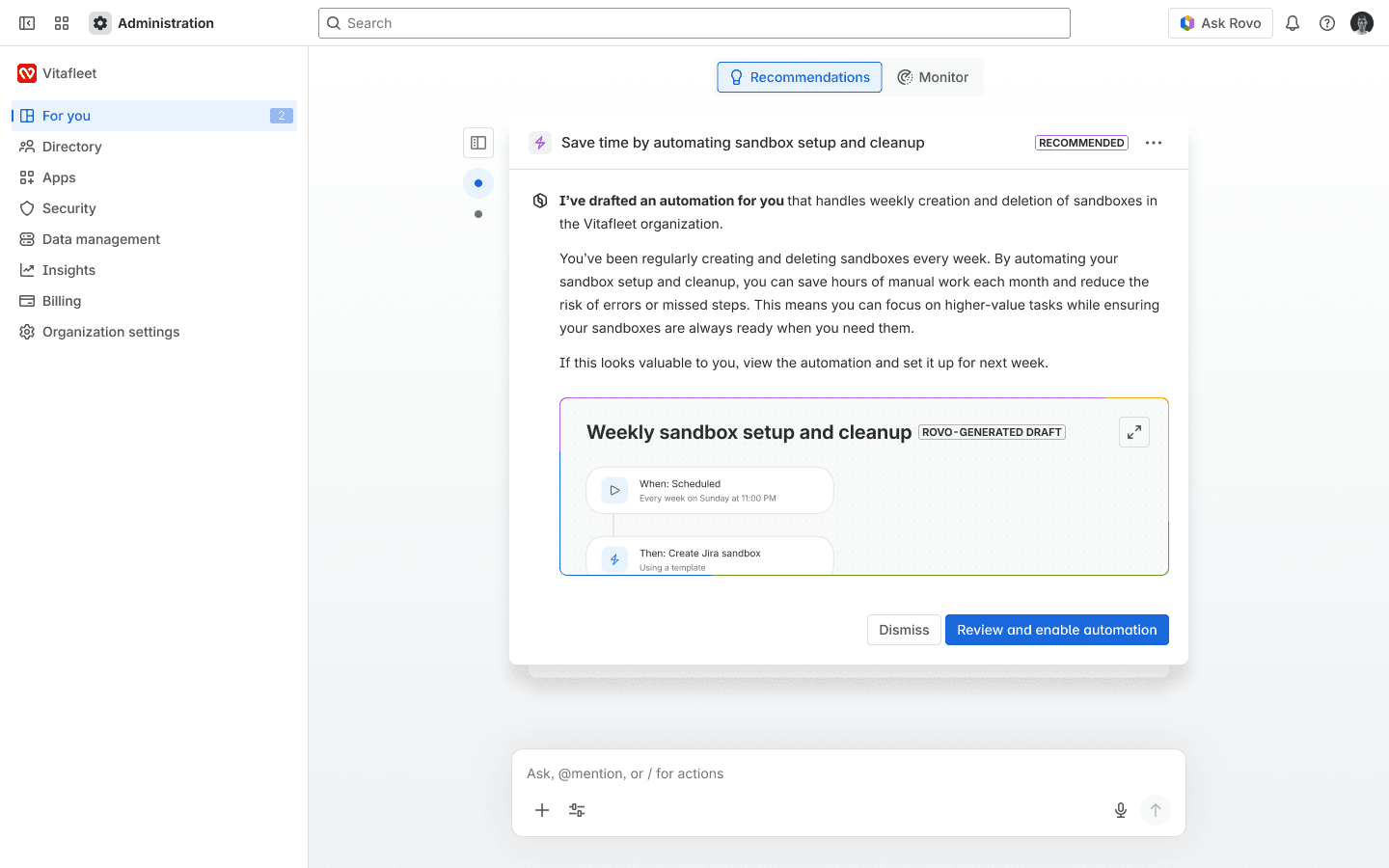
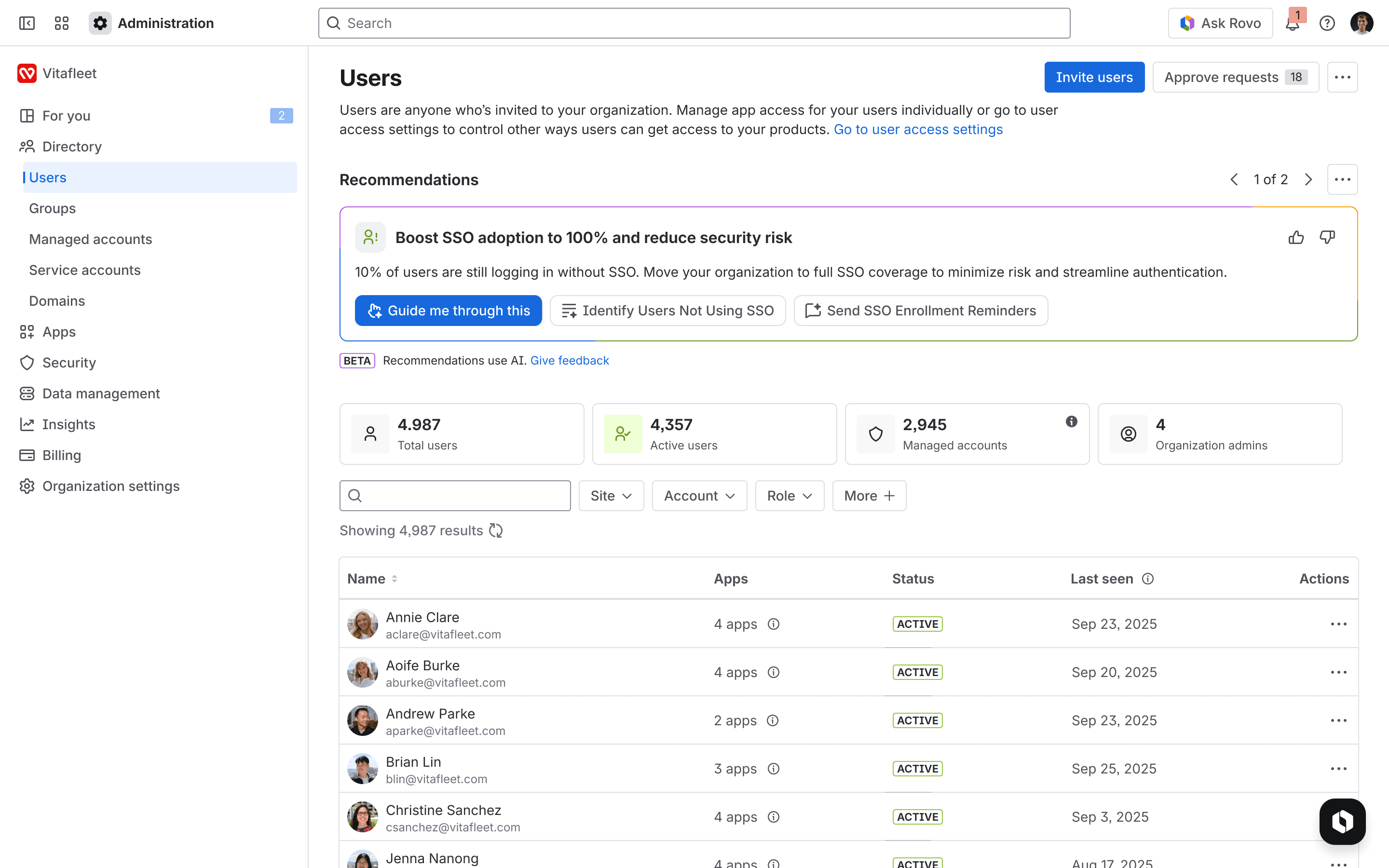
Recommendations were designed to reduce the burden of manual discovery. Instead of expecting admins to search through dashboards, Watchtower could surface high-priority work items with context, rationale, and a suggested next step.
Each recommendation needed to answer:
What is happening?
Why does it matter?
What evidence supports this?
What should I do next?
Monitor: helping admins track signals over time
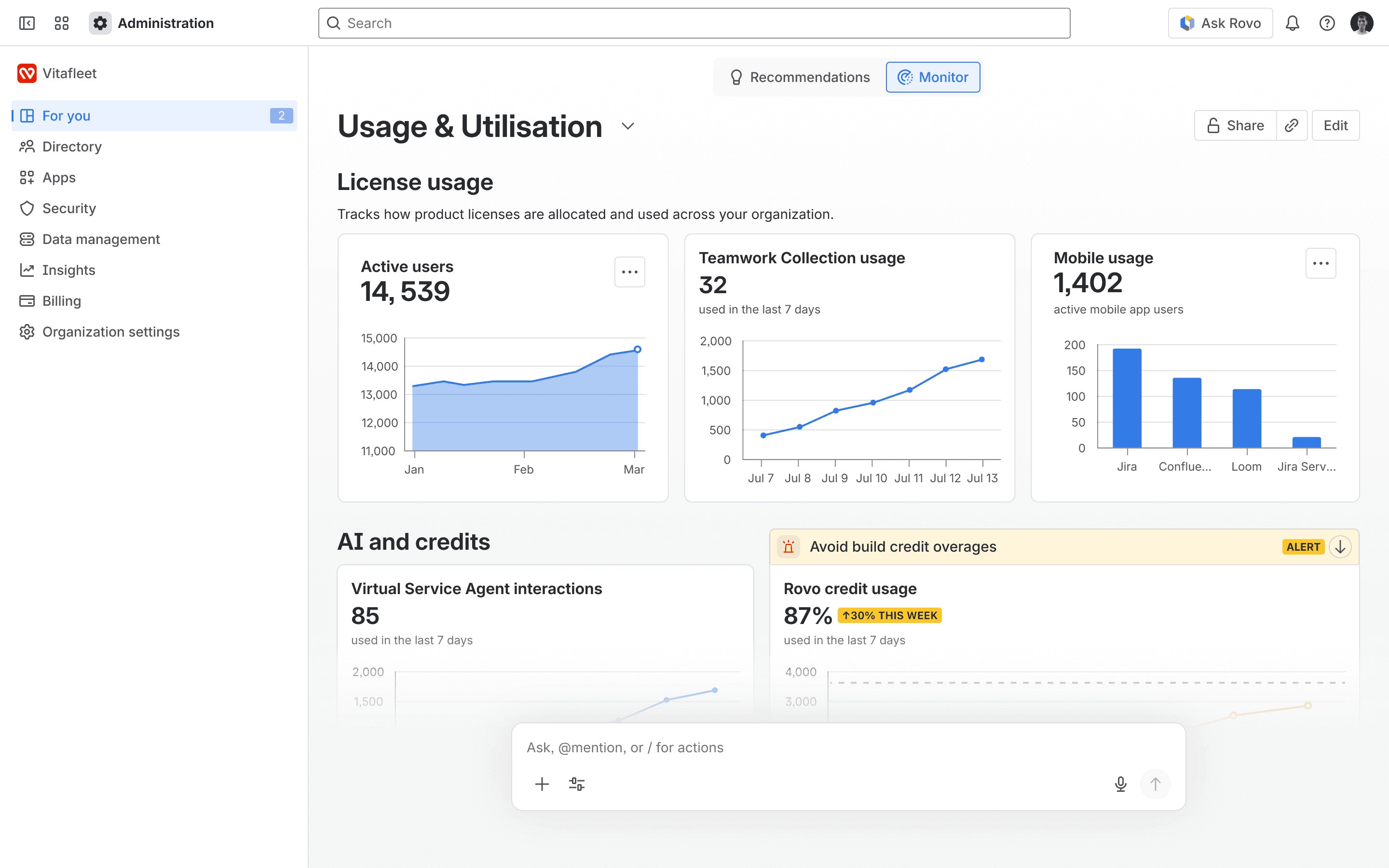
Monitor gave admins persistent visibility into the areas they cared about, such as usage, adoption, cost, risk, or compliance. While recommendations surfaced what required attention, Monitor helped admins understand whether the system was healthy over time.
This pattern was important because admins did not only need one-off alerts. They needed confidence that they could observe change, detect anomalies, and understand whether previous actions had improved the system.
Canvas: moving beyond chat into guided investigation
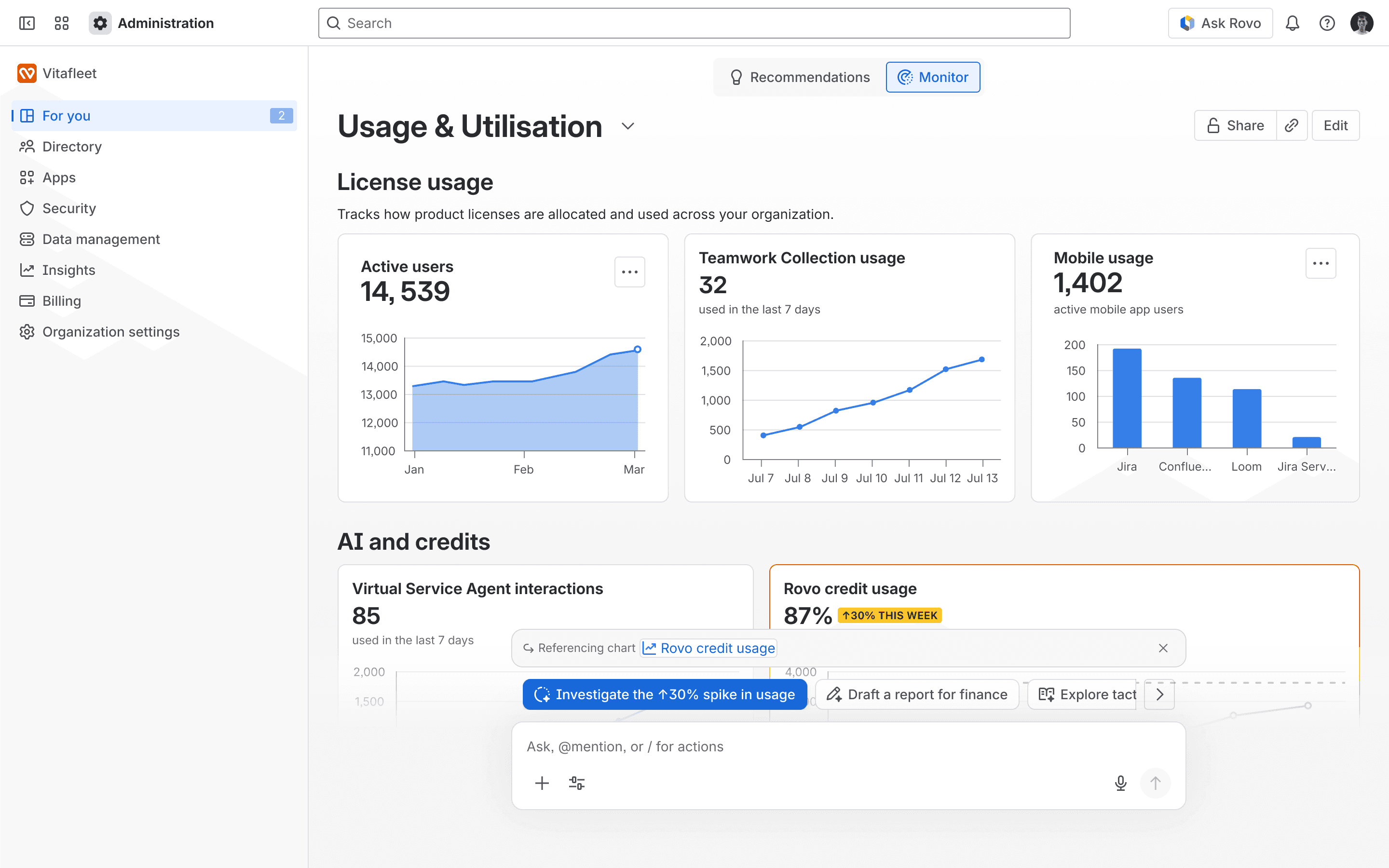
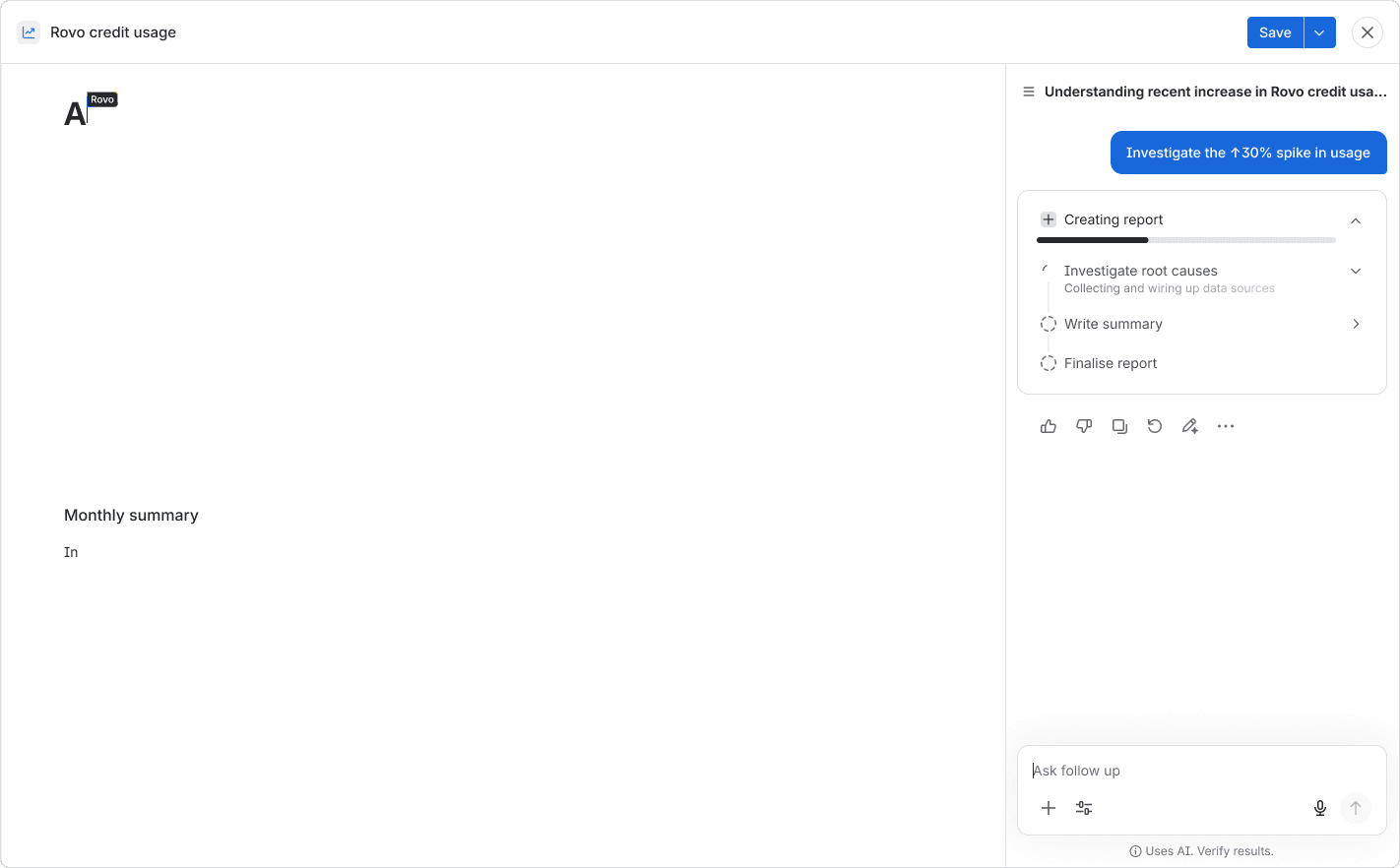
Canvas explored how AI could support deeper admin work beyond simple Q&A. It gave admins a workspace to investigate an issue, review evidence, compare options, and move toward action while keeping the reasoning visible.
This was important because enterprise admins need more than fast answers. They need confidence, traceability, and control.
Canvas helped translate AI from a conversational assistant into a decision-support workflow.
The system: one connected Watchtower framework
The final framework connected the three patterns into one operating model:
Onboarding builds context. Recommendations highlight what matters. Monitor tracks what changes. Canvas supports investigation and action.
This turned Admin Hub into a more proactive, personalised, and action-oriented experience.
AI interaction patterns - beyond chat
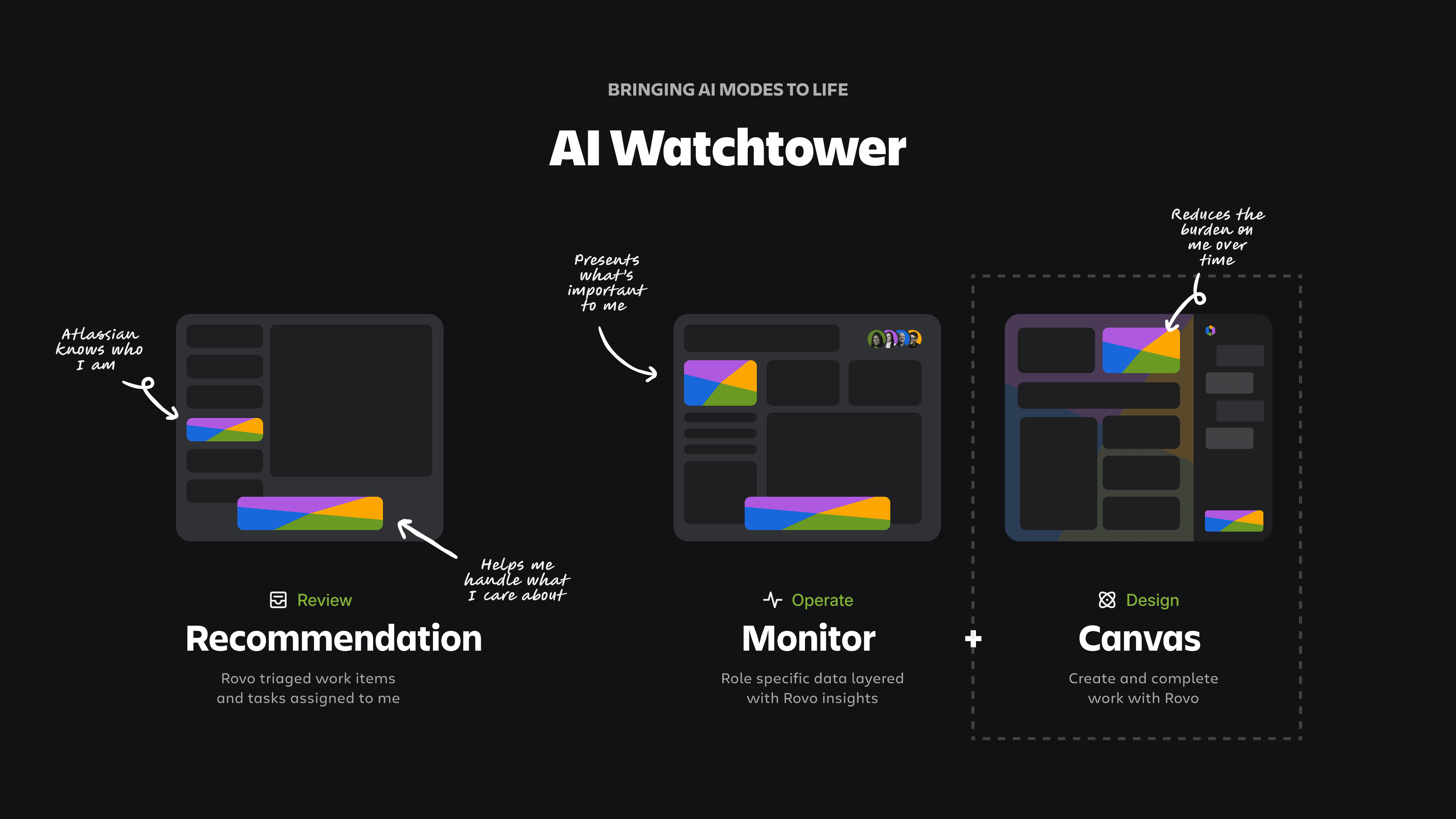
A chatbot could help admins ask questions, but it would not solve the deeper workflow problem. Admins needed a system that could proactively surface what mattered, explain why it mattered, and guide them toward the right action.
Process
5 layers to turn a broad AI opportunity into a focused product direction
1. Identified where AI could create meaningful admin value
I worked with product and engineering to focus on recommendations, signal detection, and cross-system visibility — areas where LLMs could meaningfully improve admin work rather than add novelty.
2. Grounded the vision in emerging admin and AI patterns
I studied how leading SaaS platforms and AI-native products were evolving admin workflows, helping us identify where to lead rather than simply follow.
3. Narrowed a broad AI vision into Watchtower
The initial concept explored intent-based AI journeys through Modes. I helped focus this into Watchtower: a clearer hero experience centred on fragmented workflows, excessive touchpoints, and limited visibility into what matters most.
4. Sequenced the vision to balance ambition and ROI
Working with product and engineering, I shaped an incremental path: start with in-context recommendations while building toward the fuller Watchtower operating model.
5. Used validation to shape the rollout strategy
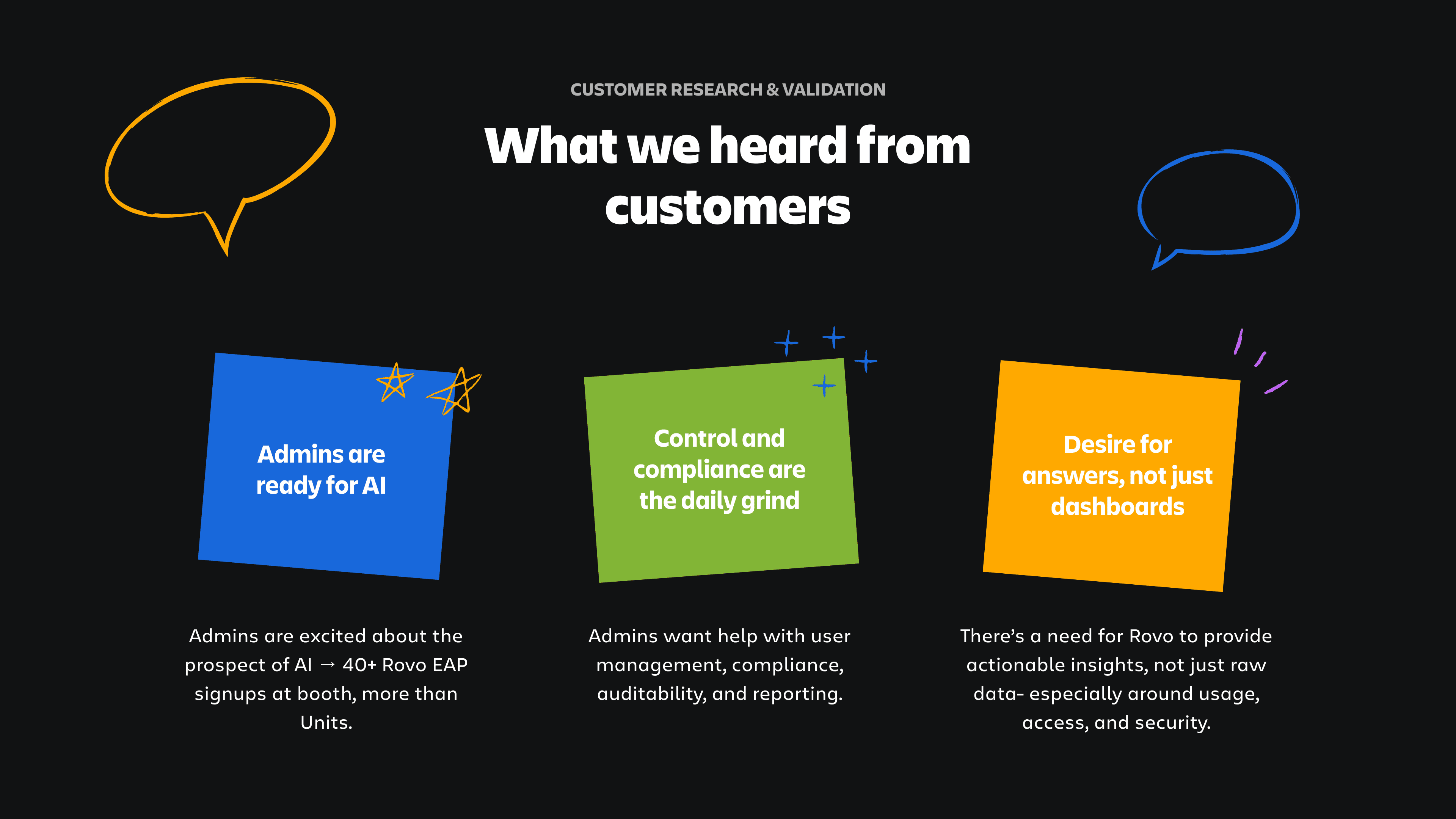
Early testing showed stronger customer pull for Monitor than Recommendations, as it felt closer to existing admin behaviours while still enabling more proactive ways of working.
Outcome
Aligned as the path forward
The project created alignment around Watchtower as the path forward for AI-native administration.
Strategic alignment
Leadership and cross-functional partners aligned on Watchtower as the preferred direction
Proof-of-concept path
Early LLM-powered release work was approved
Customer confidence
Validation showed admins preferred proactive Watchtower-style experiences over task-based conversational AI
Business case
The direction supported a modelled opportunity of up to $50M annual revenue growth and $1.5M annual support cost reduction
Reflection
Designing beyond the chatbot
This project reinforced that the most valuable AI experiences are not always the most autonomous ones. For enterprise admins, the opportunity was to design a proactive and explainable operating model: helping people notice what matters, understand why it matters, and act with confidence.
It also changed how I approached the design process itself. I used AI to accelerate research, explore interaction patterns, prototype ideas, and pressure-test assumptions — helping me connect strategy, systems thinking, and execution more fluidly.
The result was an ambitious direction grounded in real admin behaviours and an incremental path toward delivery.